
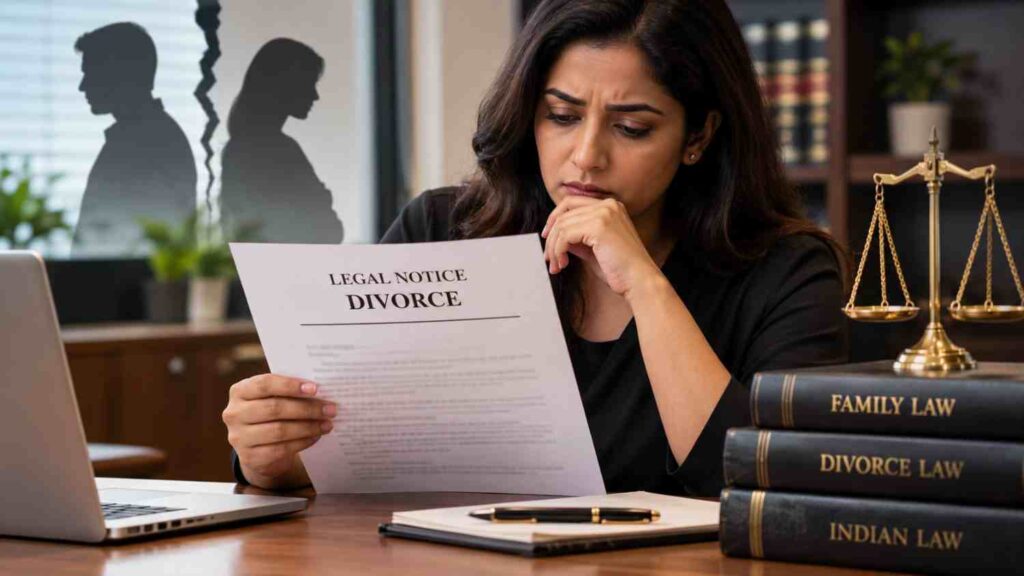
Receiving a divorce notice from your spouse can be difficult, especially when you are not expecting it. The notice may contain allegations about your marriage, requests for separation, or demands relating to maintenance, property, or children.
You may be unsure whether you need to reply, how much time you have, or what happens if you disagree with the allegations.
A divorce legal notice does not automatically end your marriage. It is important to understand what the document says before deciding how to respond.
This article explains how to respond to a divorce notice in India, what documents may be useful, and the legal steps you should understand.
What Is a Divorce Legal Notice in India?
A divorce legal notice is a written communication usually sent by an advocate on behalf of one spouse. It may explain the reasons for seeking divorce and ask the other spouse to respond or consider a settlement.
The notice may refer to cruelty, desertion, marital disagreements, or other circumstances. It can also raise questions about financial support, child custody, or property.
Not every divorce case begins with a legal notice. For example, the Hindu Marriage Act, 1955 does not generally require one spouse to send an advocate’s notice before filing a contested divorce petition.
A legal notice is also different from a summons issued by a court. Understanding this difference matters because court documents may require action within a specific period.
What Should You Do After Receiving a Divorce Notice?
1. Read the Notice Carefully
Start by reading the complete notice. Check who sent it, when it was issued, and what your spouse is asking you to do.
Pay attention to the allegations and any documents mentioned.
Some notices ask for a written reply within a particular period. Others propose mutual consent divorce or warn that legal proceedings may follow.
Do not assume that every allegation is correct or that receiving the notice means the court has accepted your spouse’s claims.
If any part is unclear, seek legal advice before responding.
2. Check Whether It Is a Legal Notice or Court Summons
An advocate’s legal notice and a court summons have different legal implications.
A legal notice is generally correspondence sent before or outside court proceedings. The response period mentioned in it is not automatically a statutory deadline.
A court summons is issued as part of legal proceedings. It may include a case number, court details, hearing date, or directions concerning a written response.
If you receive court papers, check the instructions and deadlines immediately.
Ignoring a court summons may allow proceedings to continue without your participation, depending on the circumstances and applicable procedure.
3. Review the Allegations and Prepare Your Explanation
A divorce notice may contain statements you believe are incorrect or incomplete.
Read each allegation separately and consider what actually happened.
For example, if the notice claims that you deserted your spouse, relevant facts may include when you began living separately, why the separation happened, and whether you remained in contact.
Avoid preparing your reply based only on anger or frustration.
A useful response should clearly explain your position and distinguish between facts you accept and allegations you dispute.
You can discuss the allegations with a divorce lawyer in Bangalore before preparing a formal reply.
4. Collect Relevant Documents and Records
Documents can help explain the circumstances of your marriage and support your response.
Depending on the issues raised, useful records may include your marriage certificate, identity documents, correspondence, financial statements, and previous legal notices.
If the dispute concerns communication between spouses, relevant messages or emails may also help establish a timeline.
For financial claims, available salary details, bank statements, expense records, and information about existing commitments may be relevant.
Keep original documents safe. Do not alter messages, delete records, or attempt to obtain information through unauthorised access.
Your advocate can help identify which documents are relevant and whether they can be used in legal proceedings.
5. Prepare a Written Reply With Legal Guidance
A written reply gives you an opportunity to explain your position.
It may respond to the allegations, correct factual mistakes, and address the requests made in the notice.
The reply should use clear language and avoid unnecessary accusations.
A reply does not need to repeat every disagreement from the marriage. It should focus on the issues that have legal relevance.
An advocate can also check whether the proposed response creates unintended admissions or conflicts with other pending proceedings.
The aim is to communicate your position accurately, not to escalate the dispute.
How Much Time Do You Have to Reply to a Divorce Notice?
There is no single statutory response period for every private divorce legal notice in India.
The sender may request a reply within 7, 15, or 30 days. However, a deadline written by an advocate should not automatically be treated as a court ordered deadline.
That does not mean the notice should be ignored.
Responding within a reasonable period can help clarify your position and may create an opportunity to discuss unresolved issues.
If a divorce petition has already been filed and you have received court documents, the applicable procedural rules and court directions become important.
The time available for a formal response should be checked against the papers served on you.
What Happens If You Do Not Reply to a Divorce Notice?
Not replying to a private legal notice does not automatically mean you agree with its allegations.
It also does not grant your spouse a divorce.
However, your spouse may decide to file proceedings, and the notice may later be referred to as part of the dispute.
A considered reply can help record your position before the matter reaches court.
The position is different if you ignore court summons or directions. The court may take further procedural steps, including proceeding in your absence where legally permitted.
For this reason, always identify the type of document you have received.
Can You Refuse Divorce After Receiving a Notice?
Receiving a divorce notice does not mean you must agree to end the marriage.
If your spouse proposes mutual consent divorce, both parties must voluntarily agree and meet the requirements of the applicable law.
For marriages governed by the Hindu Marriage Act, Section 13B provides the mutual consent divorce procedure.
If you do not agree, you should not sign a settlement or joint petition without understanding its implications.
Your spouse may still pursue a contested divorce if legally available grounds exist.
You can read more about the requirements through ANSS Law Associates’ mutual divorce lawyer in Bangalore service page.
What If the Divorce Notice Mentions Child Custody or Maintenance?
Some divorce notices include proposals concerning children, financial support, or property.
These issues should be examined separately from the decision to divorce.
For child custody and visitation, the child’s welfare is a central consideration. Existing arrangements, schooling, daily care, and the child’s needs may all be relevant.
Maintenance questions depend on the applicable law, financial circumstances, and other facts.
Do not assume that an amount demanded in a notice is automatically payable or that a proposed custody arrangement is already legally binding.
ANSS Law Associates provides information about family law services in Bangalore, including custody, visitation, and maintenance matters.
Can Divorce Disputes Be Resolved Without a Contested Trial?
Some matrimonial disputes may be resolved through discussion, mediation, or an agreed settlement.
Section 9 of the Family Courts Act, 1984 requires Family Courts to make efforts towards settlement where possible and appropriate.
But settlement is not compulsory in every situation. Any agreement should be voluntary, and safety concerns or pressure should be raised with your lawyer.
If both spouses decide to proceed with mutual consent divorce, the relevant statutory requirements and court procedure must still be followed.
A private settlement alone does not automatically dissolve a marriage.
When Should You Consult a Divorce Lawyer?
Legal guidance is particularly useful when a notice contains serious allegations, financial demands, concerns about children, or references to existing proceedings.
A lawyer can explain which law applies, review the documents, help prepare an appropriate response, and identify any immediate procedural requirements.
If you are dealing with a notice or court petition in Bangalore, ANSS Law Associates, led by Advocate Narayana Rao, assists with divorce and related family law matters.
You can seek advice before deciding whether to contest the allegations, explore settlement, or take further legal action.
Frequently Asked Questions
Is it compulsory to reply to a divorce legal notice in India?
A reply to a private advocate’s notice is not automatically compulsory. However, responding may help clarify your position. Court summons and directions require separate attention.
Can my spouse get a divorce without my consent?
A spouse may seek contested divorce under applicable legal grounds even without the other’s consent. The court must examine the case before granting relief.
Can I reply to a divorce notice without a lawyer?
You may prepare your own response, but legal guidance can help you understand the allegations and avoid statements that may affect later proceedings.
Does receiving a divorce notice mean the marriage has ended?
No. An advocate’s notice does not dissolve a marriage. The required legal process depends on the law governing the marriage.
Conclusion
Receiving a divorce notice can raise many questions, but the first step is to understand the document and the allegations it contains.
Read the notice carefully, preserve relevant records, check whether court proceedings have started, and consider legal advice before preparing your reply.
A clear and factual response can help explain your position. It also helps you make informed decisions about settlement, contested proceedings, and related family matters.
Legal information note: This article provides general information about matrimonial legal notices in India. The applicable law and response procedure depend on the marriage, the documents received, and the circumstances of the case. It is not a substitute for advice about an individual matter.